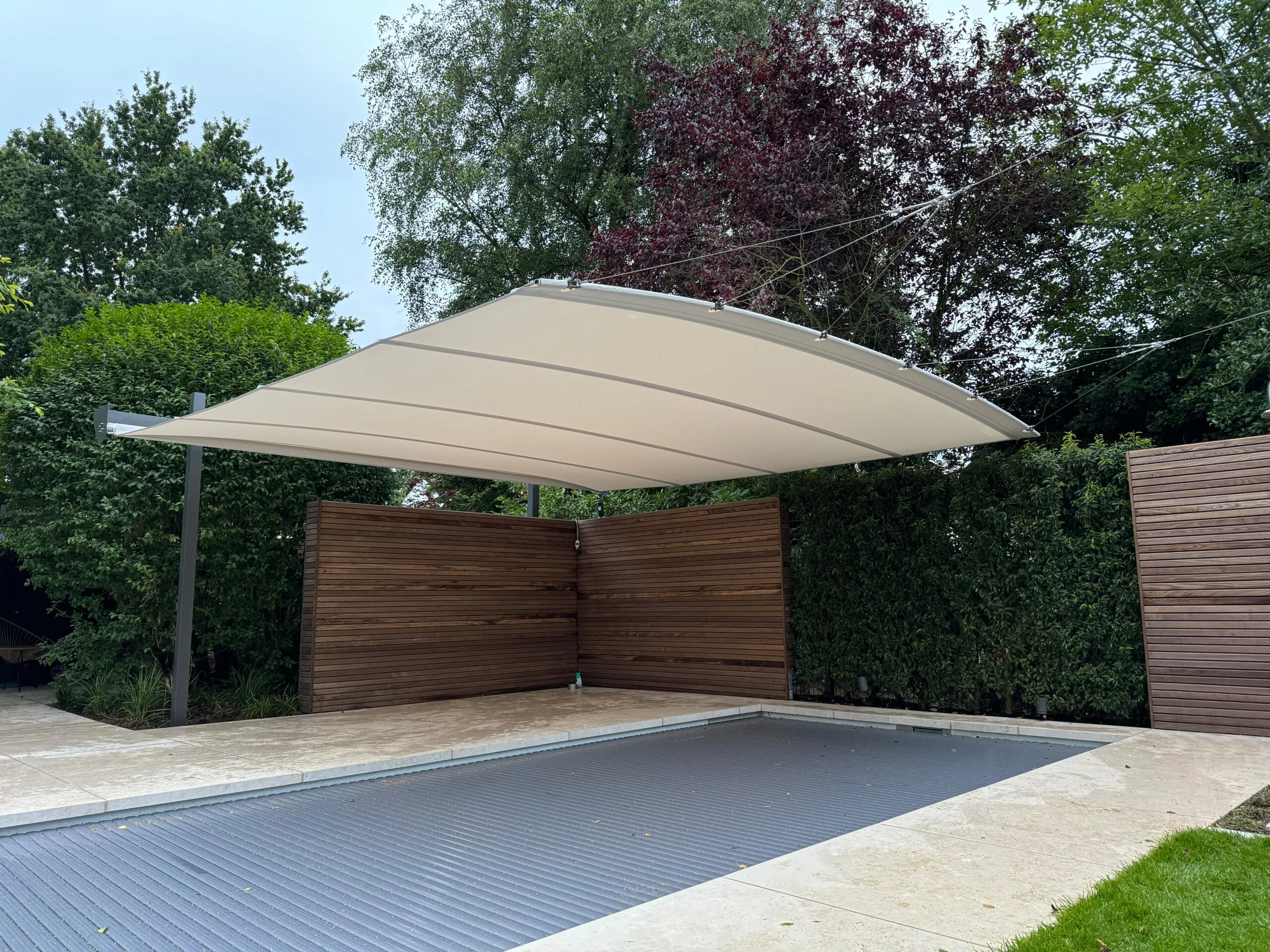
Retractable Shade for Outdoor Dining & Hospitality
Outdoor seating only earns its keep if it is usable. See what retractable shade changes for cafés, restaurants and hospitality venues — from seating coverage and staff operation to weather, circulation and planning at scale.
Outdoor Seats Only Count When They Are Usable
For a café, restaurant or hospitality venue, outdoor shade is ultimately a usability question. A terrace that bakes from noon until four is harder to trade through during those hours, while permanent cover can remove the winter sun that makes an outdoor table desirable in the first place.
Retractable shade allows the same area to respond to both conditions: shade over the tables when direct sun becomes uncomfortable, and open sky when sunlight is an asset.
Start with the seating plan and the venue's actual trading hours. Then assess where shade needs to fall at the times customers are most likely to use the space. That approach is more useful than choosing a canopy from the building footprint alone.
Cover the Seating Plan, Not the Building Line
Begin with the tables and circulation you actually want to protect, then work backwards to the shade plane. The useful question is not simply how wide the façade is, but where the sun reaches customers during service.
Öhrra's One and Square systems are available in a range of configurations, while larger terraces can be divided into multiple retractable shade zones.
For broad hospitality areas, Öhrra Duo places two retractable sails back to back around shared centre supports. This can suit a long terrace, courtyard or outdoor dining area where two neighbouring seating zones need shade without filling the floor plan with structure.
The two Duo sails can be operated together or independently, allowing one area to remain open while the neighbouring bay is shaded. Available dimensions and the final arrangement should always be confirmed for the particular project.
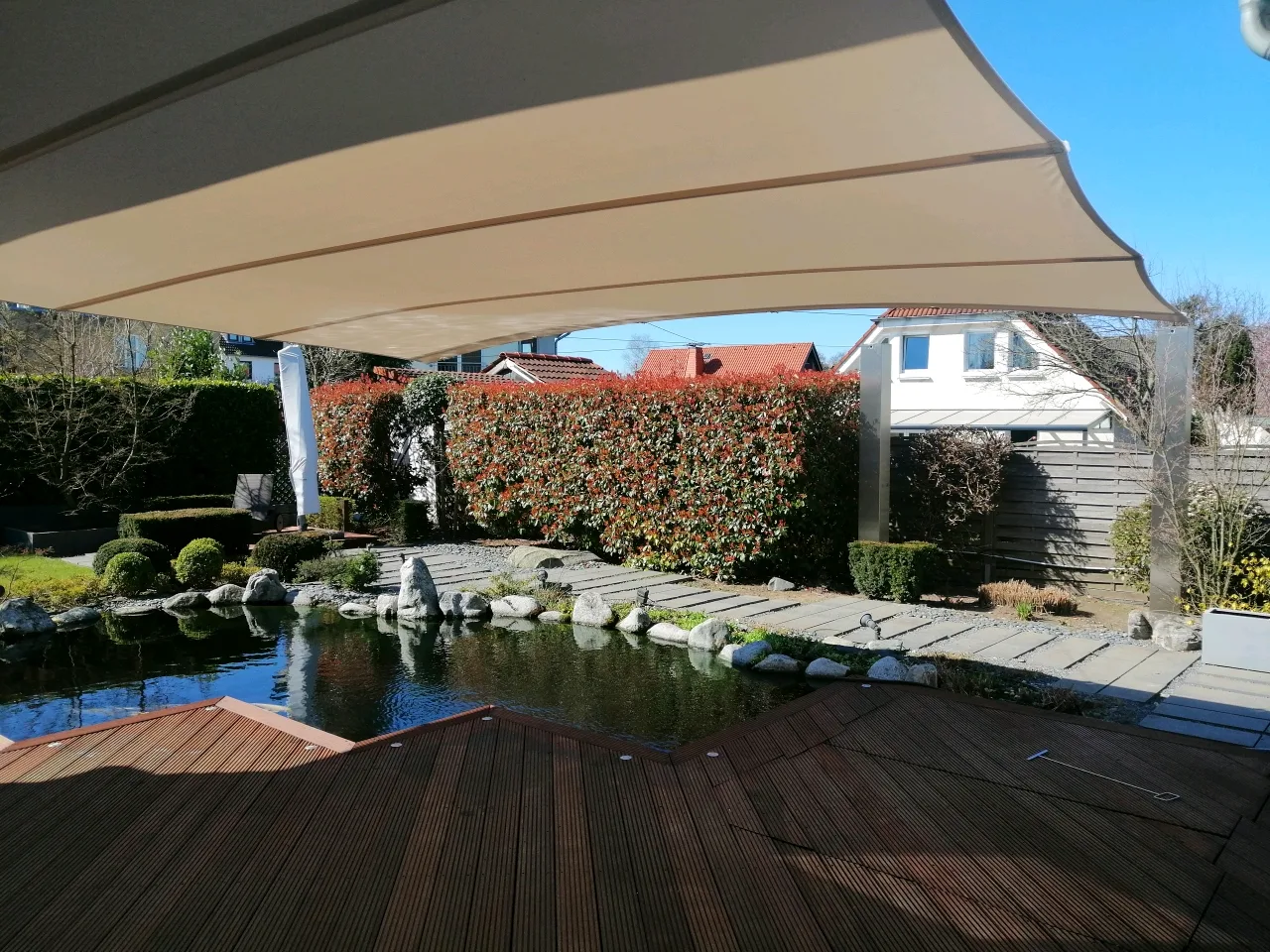
Where the building itself cannot provide suitable fixing points, Öhrra Zen provides a freestanding approach. The frame and foundations still require project-specific planning, but the system avoids relying on a wall or roof connection.

Minimal Structure Means More Covers
Fewer supports can make table placement, circulation and service paths easier to organise, subject to the final engineering and site layout. That is one of the practical differences between a tensioned retractable shade system and a conventional pergola or heavily framed canopy.
Öhrra One uses a single tension mast, and the tension point can be positioned well away from the sail. On a constrained terrace, that can allow the supporting structure to sit near a boundary, planter or other low-conflict part of the site rather than directly between tables.
Öhrra mast options extend through a catalogue range of approximately 3.0–5.2 metres, with stainless-steel and powder-coated aluminium options available. For a hospitality project, the finished clearance, sightlines, service path and relationship to umbrellas, heaters, lighting and landscaping should all be resolved as part of the actual site design.
Operation by Staff, Not by the Owner
Hospitality shade needs to work for the people actually opening and closing the venue. A system that depends on one particular person remembering a remote or knowing an app login is more difficult to operate consistently.
A fixed wall control near a service door or other staff area may make sense for a shared operating routine. Remote control is standard, while app-based control can be specified where appropriate. Any off-site or scheduled automation should be confirmed for the selected control package rather than assumed.
Decide who is responsible for retracting the sails, what weather condition triggers that decision, and how the system is operated if the usual manager is not on site.
Optional wind sensing can assist with routine protection, but it is not a substitute for staff procedures. Wind conditions are assessed over an interval rather than instantaneously, so a sensor cannot guarantee protection from a sudden gust.
Operating limits also depend on the system. Weight-tension systems such as One and Square should be retracted before Beaufort 7 conditions, approximately 50–61 km/h, while spring-tension systems such as Zen should be retracted before Beaufort 6 conditions, approximately 39–50 km/h. Severe-weather warnings should be acted on before those conditions arrive.
Rain, Heat and the Details That Show Wear
In hospitality, the small practical details matter. Rainwater needs to leave the shade without being directed onto guests, doorways or the route staff use to carry food and drinks.
Öhrra's shaped cross-profile raises the fabric through the centre, helping water move toward the side edges rather than simply collecting over the seating area. That lets the system maintain a relatively level architectural appearance while still managing normal rainfall.
Runoff still needs somewhere sensible to go. The location of the side edges should therefore be considered alongside paths, entrances, furniture and service zones.
Öhrra sails use WeatherMAX 80, a solution-dyed outdoor performance fabric designed for demanding exterior environments. Its combination of water resistance, UV performance and breathability is relevant to hospitality spaces where the aim is to create shade without replacing the outdoor area with a heavy solid roof.
See the Shade in Motion
Watch on YouTube →
Common Questions About Hospitality Retractable Shade
Sources & Further Reading
Good Shade Begins With the Way Your Venue Actually Operates.
Share your seating plan, photographs, trading hours and the outdoor area you want to make more usable. Öhrra can help explore the right retractable shade configuration for the site.
Discuss Your ProjectKeep Exploring
Choosing Shade for a Considered, Architectural Patio