Wind-Rated Retractable Shade: What to Ask Before You Buy
Wind is the load that decides whether outdoor shade survives. What a wind sensor really does, why a demonstration is not a rating, and the questions to put in writing.
Wind, Not Sun, Is the Design Load
Any fabric plane held in the air is a sail in the aerodynamic sense. Sun and rain are comfort problems; wind is the structural one. It is the load that decides mast sizing, footing design and how a system behaves over a decade, and it is the question most shade conversations skate past.
The right posture as a buyer is straightforward: retractable shade manages wind by getting out of the way. Retraction substantially reduces exposed fabric area; the mast, fixings and retracted assembly still need site-specific structural design. So the real questions are how reliably the system retracts, who decides when, and what the structure is designed to take while it is out.
What a Wind Sensor Actually Does
Öhrra offers an optional wind sensor that automatically retracts the shade sail when wind exceeds set limits. The company is unusually direct about the limits of that, and it is worth quoting the substance rather than softening it: interval-based sensing cannot protect against sudden gusts, and remote-controlled retraction is required during storm warnings and at wind force 7.
Read that as a design brief rather than a disclaimer. A sensor samples the wind periodically; a gust front can arrive between samples. The sensor may respond to sustained wind above its configured threshold, but it cannot be assumed to catch a sudden gust. It does not replace a person retracting the sail when a warning is issued, and no sensor should be presented as making a canopy storm-proof.
Why a Demonstration Is Not a Rating
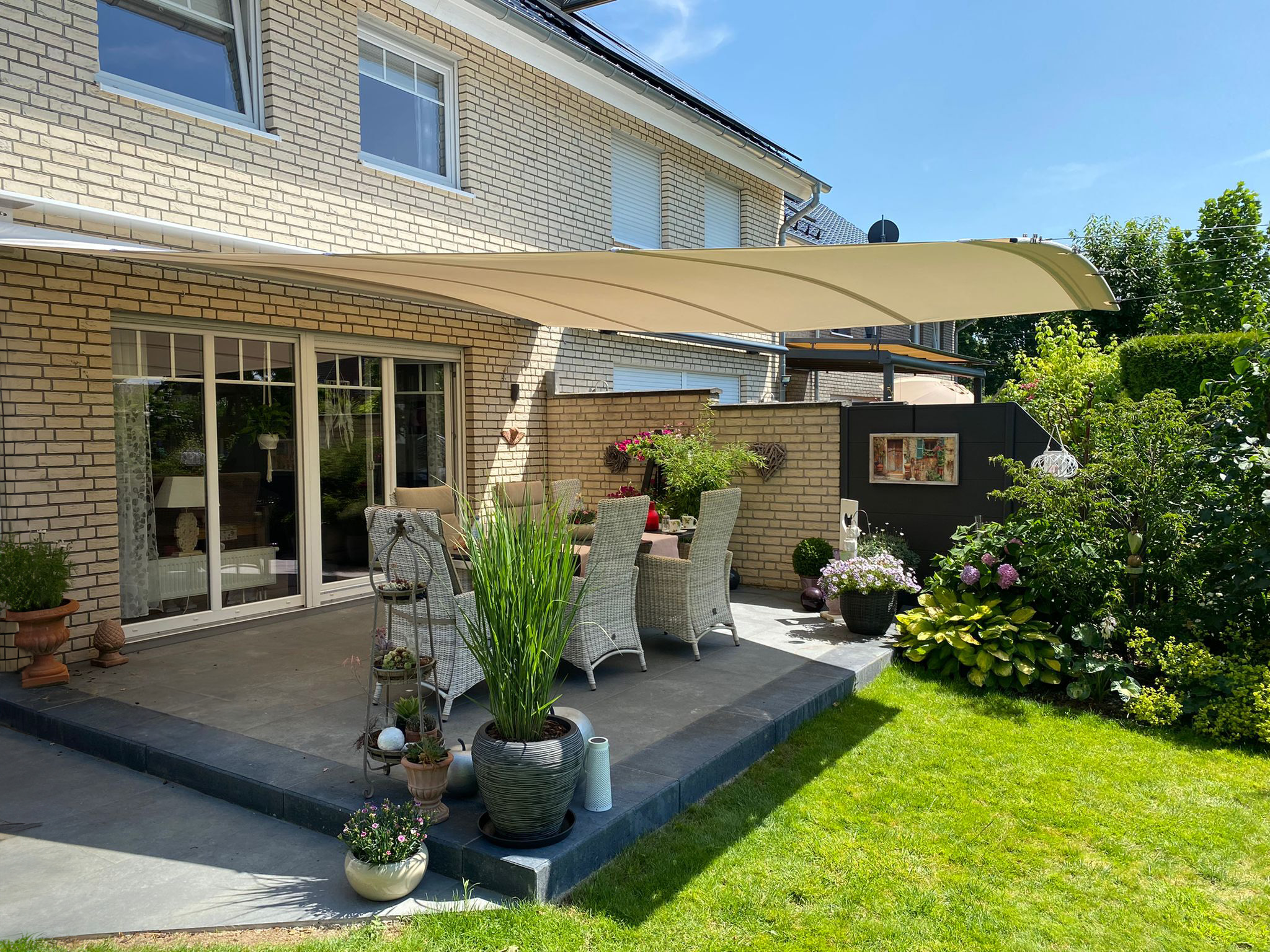
Manufacturer footage of a canopy holding up in bad weather is useful evidence that a system is engineered seriously. It is not a specification for your site. A demonstration shows one system, at one size, on one structure, in one set of conditions.
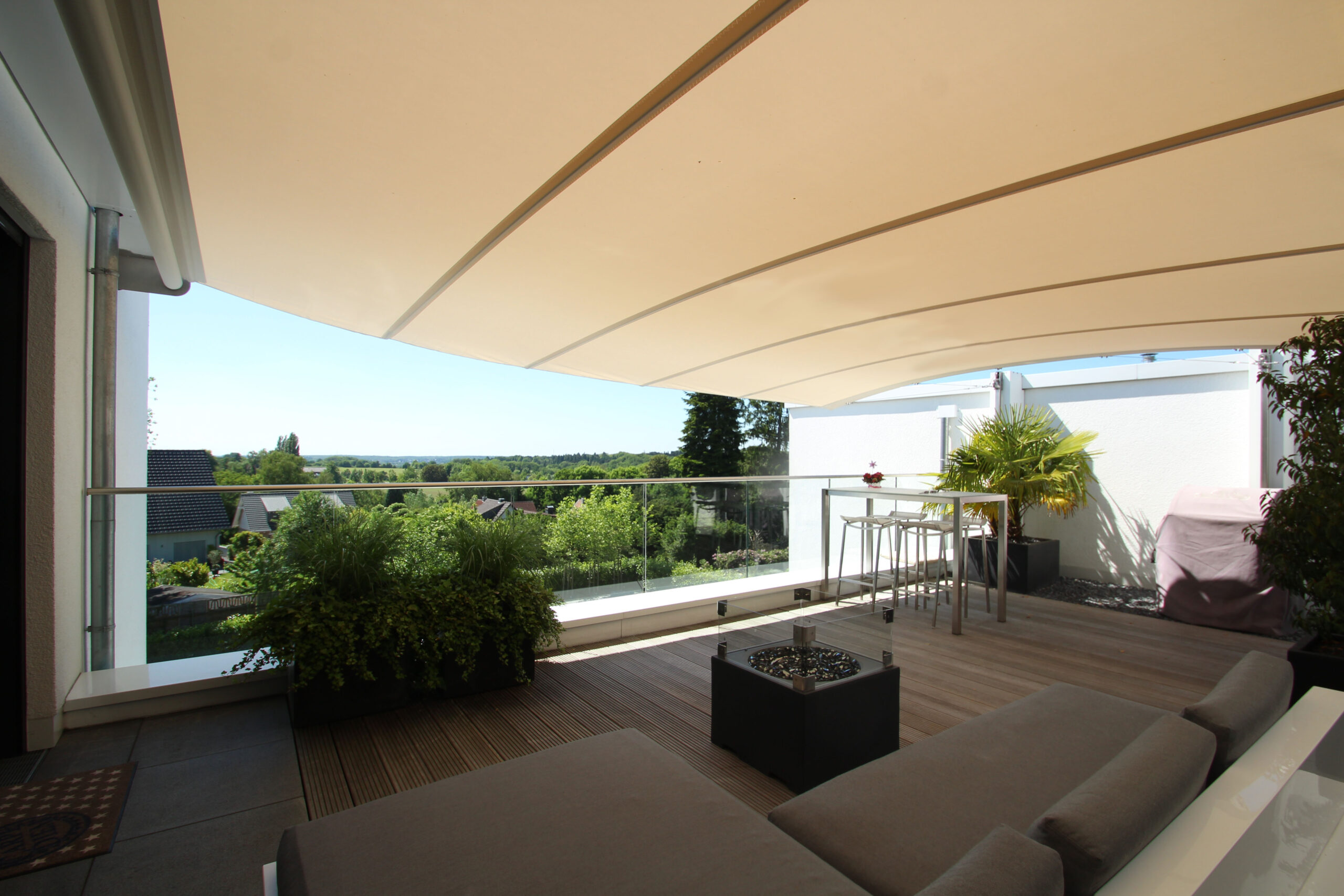
Your site is different in every one of those variables. A 4 × 4 m sail behaves differently from an 8 × 5.5 m sail. A ground-level courtyard enclosed by planting is a different wind environment from a fifth-floor roof terrace or an exposed coastal block. Treat published or filmed performance as an indication of engineering intent, and treat the numbers that apply to your installation as something to be confirmed in writing for your configuration.
Structure: Where Wind Loads Actually Go
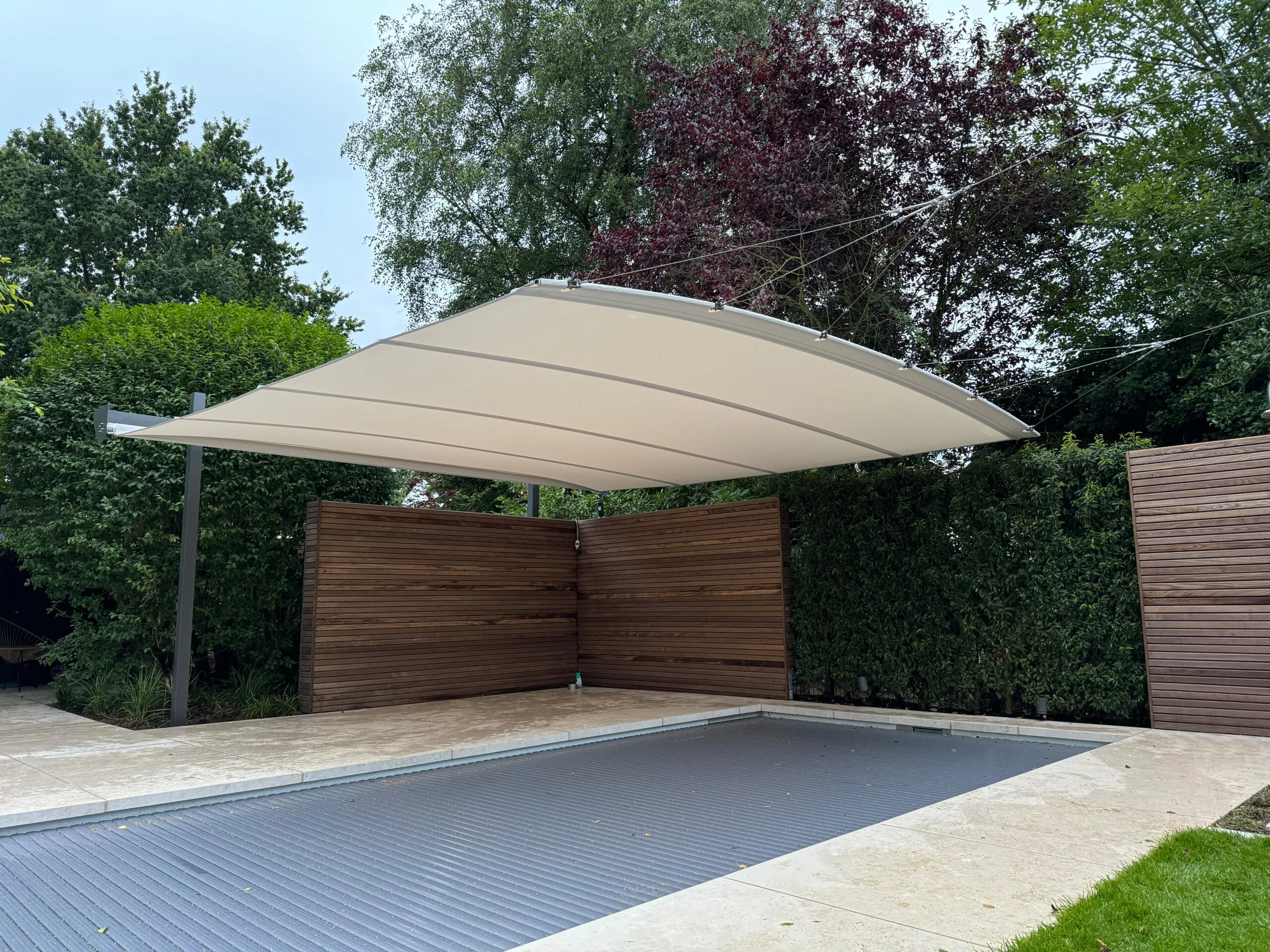
Öhrra Square is the system explicitly positioned for exposed sites, because its tension points sit wide to the perimeter and it uses at least two masts, keeping tension consistent across the whole fabric plane. Öhrra describes it as suited to roof decks, open courtyards and coastal aspects — anywhere wind is a factor.
Masts run 3.0–5.2 m in stainless steel or powder-coated aluminium, with internal masts at 270 × 270 mm and external masts at 101.6 mm. Counterweight arrangement depends on the mast profile: concealed in the internal mast and expressed externally on relevant external profiles. Fixing options are a ground-mounted base, a wall bracket at the sail end, or a freestanding weighted base. Which of those is appropriate on an exposed site is an engineering decision about your substrate and your exposure, not a catalogue choice.
The Questions to Put in Writing
Before you commit, ask for answers you can keep:
- What wind limit will the sensor be set to for my system and size, and how is that limit determined?
- How often does the sensor sample, and what happens if power or the signal is lost?
- What footing or fixing design is proposed for my substrate, and who is engineering it?
- What are my responsibilities in a storm warning, and what happens if nobody is on site? Does the selected control package support verified off-site retraction?
- What does the warranty say about wind damage, and what conditions void it?
A supplier who answers these plainly is telling you something useful about how the system will be installed.
See the Shade in Motion
Watch on YouTube →
Common Questions
Any wind figure needs to be confirmed by Öhrra for your specific system, size and installation — it is not something to infer from a video or a general product page. Ask for the limit that applies to your configuration in writing before ordering.
No. The optional sensor retracts the sail when set limits are exceeded, but Öhrra states that interval-based sensing cannot protect against sudden gusts and that remote retraction is required during storm warnings and at wind force 7.
Öhrra positions the Square for exposed conditions — open courtyards, roof terraces and coastal aspects — because its wide-set tension points and multi-mast, ribbed geometry keep tension consistent across the fabric. Final suitability still depends on a site assessment.
Fixing options include ground-mounted bases, wall brackets at the sail end and freestanding weighted bases. On an exposed or elevated site, the footing and fixing design should be worked through for your substrate as part of the assessment rather than assumed from a standard detail.
Sources & Further Reading
Good Shade Begins With Your Space.
Share your plans, photographs and the way you want to use your outdoor area. Öhrra can help you explore the right shade configuration.
Discuss Your ProjectKeep Exploring
Automated Shade vs Manual Operation: What Changes in Daily Use